Stop lighting money on fire in Mark Zuckerberg’s casino and learn to love the slow, sustainable burn of the world’s biggest visual search engine.
Walk into any university marketing seminar or a digital entrepreneurship meet-up, and the air is thick with the same buzzwords: TikTok trends, Instagram Reels algorithms, and the necessary evil of “Paid Spend” on Google and Meta.
We are taught that to exist online is to pay to play, or to dance like a caffeinated teenager in 15-second bursts just to remain relevant for the next 24 hours.
But while everyone is fighting tooth and nail (and wallet) for fleeting attention on the noisy platforms, there is a quiet giant in the corner of the room, calmly knitting an afghan of exponential, long-term traffic.
It’s Pinterest. Yes, the place where your aunt saves slow-cooker recipes and dream wedding aesthetics.
If you dismiss Pinterest as merely a digital scrapbook, you are leaving money—and massive amounts of free, qualified traffic—on the table. Pinterest is not social media; it is a visual discovery engine. It is the academic library of the internet compared to the noisy newsstand of Twitter.
Here is why you need to stop ignoring it, and how to turn it into your most reliable digital asset.
The Philosophy: The Flash Fire vs. The Slow Burn
The fundamental misunderstanding of Pinterest lies in its lifespan.
A tweet has a half-life of about 20 minutes. A Facebook post? Maybe five hours. An Instagram Story is gone in a day. To maintain traffic from these sources, you must constantly feed the beast. You stop posting, the traffic stops flowing.
A Pin, however, is immortal.
A well-optimized Pin might take three months to gain traction. It’s a slow burn. You will post it and hear crickets. But because Pinterest is a search engine, that Pin is being indexed. Six months later, someone searches for exactly what that Pin offers. They save it to a board. Their followers see it. They click through to your site.
I have Pins I created four years ago—promoting articles I barely remember writing—that still drive dozens of unique visitors to my site every single day.
That is the power of compounding digital interest. You do the work once, and it pays you dividends for years. Try getting that ROI from a Facebook ad campaign once you stop paying the daily budget.
The Strategy: Consistency is Currency
If Pinterest is a search engine, it wants what Google wants: fresh, relevant content.
Unlike Instagram, where you can burn out posting three times a day, Pinterest actually prefers high volume, provided the quality is there.
The Golden Rule: Pinterest hates sporadic behavior. Dumping 50 Pins on a Saturday and then ghosting the platform for two weeks is a recipe for failure. The algorithm favors accounts that show up daily.
Does this mean you need to be glued to Pinterest 24/7? Absolutely not. Tools like Tailwind or Pinterest’s native scheduler are essential. Block out two hours on a Sunday, schedule 5-10 Pins to go out daily for the next two weeks, and walk away.
The Practical Guide: From Zero to Pinner
Ready to stop renting attention from Meta and start owning your traffic? Here is the syllabus.
1. The Setup: Business or Bust
Do not use a personal account. You need data to know what works.
- Go to Pinterest and sign up.
- Immediately convert it to a free Business Account.
- Why? Analytics. You need to see outbound clicks (people leaving Pinterest for your site) and “saves.” You also need to “claim” your website, which tells Pinterest you are the legitimate owner of your content, giving your Pins algorithmic priority.
2. The SEO Structure: Speak their Language
Pinterest is not the place for clever, abstract titles or a dozen desperate hashtags (#blessed #entrepreneur #hustle).
People use Pinterest to solve problems or find inspiration. Your titles need to be clear descriptions of what is on the other side of the click.
The Winning Title Formula: [Main Keyword Phrase] | [Benefit or Descriptor] | [Your Brand (Optional)]
- Bad Title: “My thoughts on studying.”
- Good Title: “Study Tips for University Students | 5 Ways to Improve Focus & Retention | Witty.Computer”
Use the Pinterest search bar to find keywords. Type in your topic (e.g., “Python Programming”) and see what the auto-suggest fills in. Those suggestions are exactly what people are actively searching for. Use them in your Pin title and description.
3. Avoiding the “Shadowban”: Don’t act like a Bot
Pinterest is fiercely protective of its user experience. If you act like spam, they will quietly throttle your reach to zero without telling you. This is the dreaded shadowban.
How to stay in their good graces:
- Do not just pin your own stuff: A healthy account follows the 80/20 rule. 20% your own content, 80% high-quality content from others in your niche. You need to be a curator, not just a broadcaster.
- Watch your links: Do not link to sketchy redirect sites or URL shorteners (like bit.ly) if you can avoid it. Link directly to your blog post or landing page.
- Don’t be manic: If you suddenly follow 500 people in an hour or repin the same image 30 times in a row, you will trigger spam filters. Act like a human being, even if you are using scheduling tools.
Conclusion: The Long Game Wins
While your peers are bleeding cash trying to outbid competitors for a sliver of attention on Google Ads, you can be building a massive, self-sustaining organic traffic machine on Pinterest.
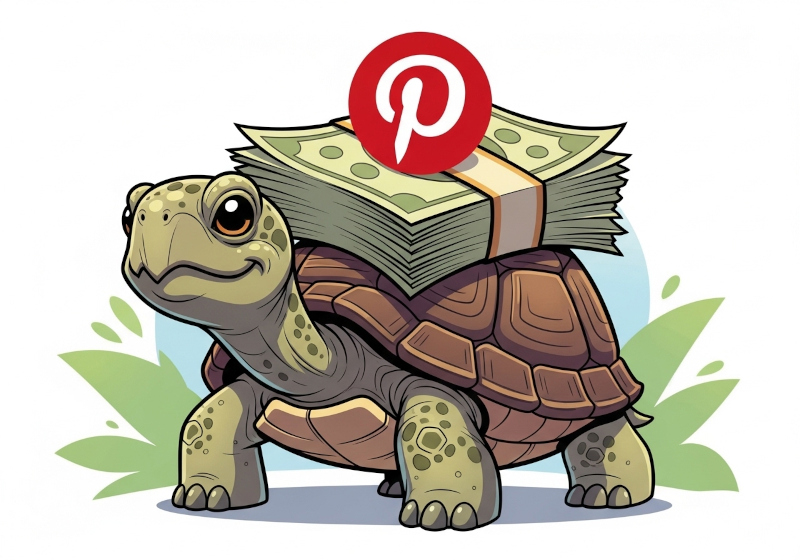
It requires patience. You won’t get the dopamine hit of instant likes. But a year from now, when that one Pin you made on a rainy Tuesday is still sending 200 potential customers to your website every week for free, you’ll realize the tortoise was right all along.